

Simulator Training
Your Gateway to Safe and Skilled Driving
Simulator Training
At Maxwell Driving School, we use advanced driving simulators that let students learn in a safe, controlled environment before they ever hit the road. Our simulators prepare new drivers to handle real-world challenges with confidence.
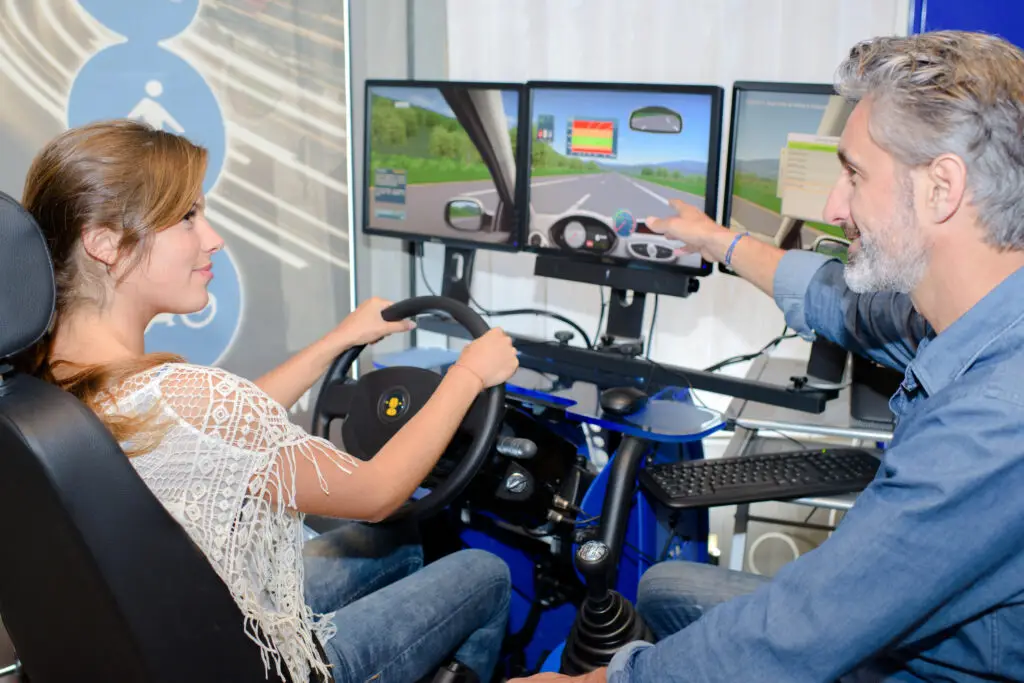
Here’s a brief overview of each of the 5 main segments:
- Getting Started: the driver is able to take a short evaluation, to establish a knowledge baseline for the instructor. Then the student is instructed how to operate the simulator. Next, the student is thoroughly taught the basics of car operation, everything from dashboard controls and functions, indicator lights, pre-drive checks, starting and stopping the engine, moving off using an automatic transmission, maneuvering at slow speeds and much more.
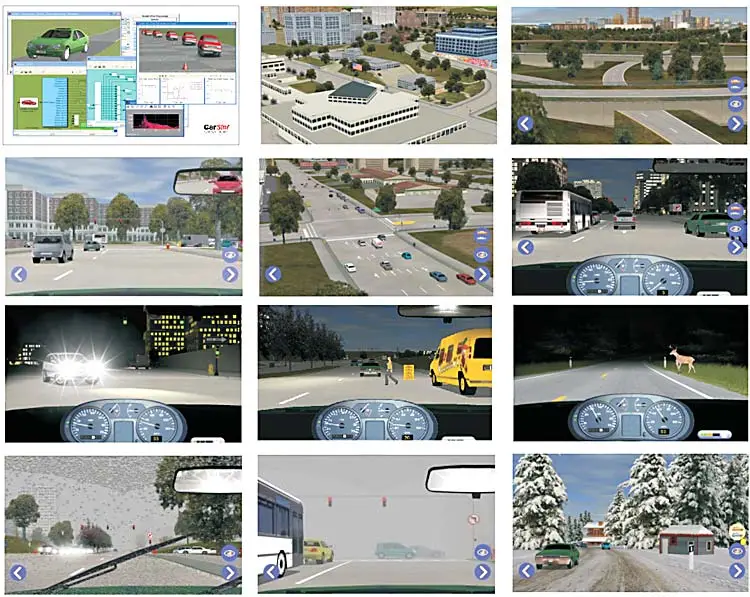
- Advanced Training: once the driver has an understanding of the basics, we expose them to more complex, real life driving scenarios. This is where he/she is instructed how to make proper lane changes (entering/leaving a lane), rules of intersections, turning left and right, merging and more. Each of these modules can be modified to adjust the traffic levels from none, low, medium and high densities before the lesson begins, as well as modifying the weather conditions and time of day.
- Night Driving: 90% of the decisions we make while driving are based upon what we see, which makes driving at night more challenging. The objective in night driving is to instruct the students on the importance of using the proper lighting to maximize visibility, in order to identify potential risk and hazards sooner, giving them more time to react. The driver is put through a series of different driving scenarios on both city and country roads, with several lessons on identifying potential hazards and accident avoidance.
- Braking and Safety Distances: this segment was created to stress the importance of a proper space cushion and how to brake safely in different driving scenarios. The student will hone in their braking and space cushion skills while driving on dry, wet and icy roadways with both ABS and non ABS braking systems. We also include a number of customizable accident avoidance scenarios.
- Risk Awareness: The purpose of this section is to develop and/or strengthen the driver’s defensive driving skills.This includes learning how to identify hazards and risks sooner, thereby giving the driver more time to react, which enables them to mitigate dangerous situations. Inside of this segment the driver will be taught how to predict the behavior of other drivers, keep the right mental attitude, be able to divide and focus attention on multiple risks while driving in complex situations, and drive defensively. The driver will encounter numerous accident avoidance and risky situations, which can be configured with various weather conditions, time of day, etc.
What You’ll Learn
Our training covers key skills every driver needs:
- Getting Started – Learn the basics: dashboard controls, starting/stopping, using gears, and maneuvering safely.
- Advanced Driving – Practice real-life situations like lane changes, intersections, merging, and turning.
- Night Driving – Build confidence in low-light conditions with reduced visibility.
- Braking & Space Awareness – Master safe stopping distances and accident avoidance techniques.
- Risk Awareness – Recognize hazards early and respond with confidence in complex situations.
Skill Development Software
Our simulator software offers:
- Hazard recognition & defensive driving practice
- Multi-car traffic interaction and unpredictable road events
- Weather conditions like rain, fog, ice, and nighttime driving
- Adjustable difficulty levels for customized learning
Why Simulator Training Works
- Safe, stress-free environment
- Realistic practice without risk
- Builds confidence before driving on the road
- Helps students develop defensive driving habits early